




How Accurate is Garmin VO2 Max?
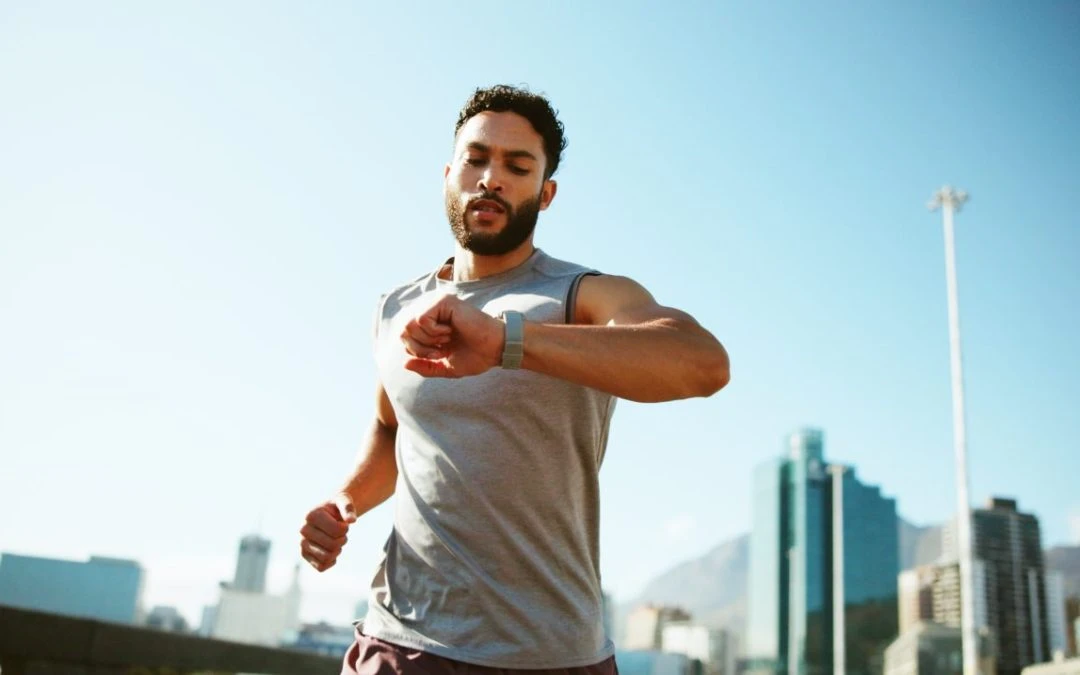
If you’ve ever finished a run and seen your Garmin flash up with a new VO₂ Max estimate, you’ve probably wondered: how accurate is the Garmin VO₂ Max, really?
VO₂ Max, or maximal oxygen uptake, is often described as the gold standard for cardiovascular fitness. It indicates the maximum amount of oxygen your lungs can inhale during maximal exercise and is strongly linked with endurance performance, longevity, and recovery capacity.
Garmin watches use algorithms to estimate this value from your workouts — but how close is that number to the truth? In this article, we’ll unpack what VO₂ Max actually measures, how Garmin calculates VO₂ Max, and where the differences arise between real laboratory testing and fitness tracker estimation.
What is VO2 Max?
VO₂ Max stands for maximal oxygen consumption or the maximum volume of oxygen your body can utilise per minute, per kilogram of body weight (ml·kg⁻¹·min⁻¹).
In simple terms, it’s a measure of how well your heart, lungs, and muscles work together to deliver and use oxygen during exercise. A higher VO₂ Max means your body can generate more energy aerobically, allowing you to sustain harder efforts for longer.
Several factors influence your VO2 Max:
- Heart function (stroke volume, cardiac output)
- Lung capacity
- Muscle mitochondrial density
- Capillary network and oxygen delivery
- Genetics and training status
VO₂ Max is widely used in sports science and clinical settings to assess aerobic fitness, cardiovascular health, and endurance potential.
How is VO2 Max measured?

In a laboratory setting, VO₂ Max is measured by direct gas analysis during an incremental exercise test, typically on a treadmill or bike ergometer.
During the test:
- You wear a metabolic mask connected to a machine that analyses every breath you take.
- You exercise at a gradually increasing workload until you reach volitional exhaustion.
- Throughout the test, the equipment measures oxygen consumption and carbon dioxide production in real time.
The point where oxygen consumption plateaus despite increasing effort is your true VO₂ Max.
A lab-based VO₂ Max is the only way to directly measure your VO₂ Max score. Everything else, including Garmin, Apple, Fitbit, and Polar estimates, uses prediction models. These models are based on correlating measurable inputs with lab-measured VO₂ Max data.
Can my Garmin watch measure VO2 Max?
Not exactly — and this is the crucial point.
Your Garmin cannot measure VO₂ Max because it doesn’t analyse your oxygen or carbon dioxide exchange. Instead, it estimates VO₂ Max using algorithms developed by Firstbeat Analytics (a company owned by Garmin).
These algorithms are based on correlations between specific, easily-measured metrics (including heart rate, speed, power output, and training history) and the VO₂ Max values recorded in the lab tests of thousands of athletes. Using these data points, Garmin estimates where you might sit on the VO₂ Max scale. While the reading can be a useful trend indicator, it’s not a direct measurement of your physiology.
So what is my Garmin tracking?
Garmin watches are highly sophisticated movement trackers. They can accurately record:
- Steps and cadence
- Heart rate
- Speed, distance, elevation (via GPS and barometer)
- Training load and recovery metrics
However, they can’t see what’s happening inside your body.
They infer aerobic capacity by observing the relationship between your pace and heart rate and assume that lower heart rates at faster speeds indicate better oxygen utilisation.
That assumption is largely based on average, but it depends heavily on the data Garmin has been trained on, and how closely you match those test populations.
For instance, if Garmin’s reference subjects were mostly young male endurance runners, but you’re a 45-year-old recreational triathlete, the algorithm may not represent you perfectly.
How accurate is the Garmin VO2 Max estimate?

Here’s where we get to the heart of the question: how accurate is Garmin VO₂ Max?
Research comparing Garmin (and other fitness-watch estimates) to laboratory measurements suggests that accuracy varies depending on conditions, activity type, and user characteristics.
1. The correlation problem
Garmin’s VO₂ Max algorithm is built on correlation models, meaning it assumes that certain patterns of heart rate and speed correspond to specific VO₂ Max levels.
However, correlations depend on how similar your training environment and physiology are to the model’s dataset.
If you run on hilly terrain, uneven surfaces, or in varying weather, your pace-to-heart rate relationship will change. Similarly, if you train mostly in zones affected by fatigue, dehydration, or stress, your readings can be skewed.
In lab conditions, everything is controlled, including treadmill gradient, air temperature, calibration, and motivation. On the road, none of those factors is standardised.
2. The variability of sensors
Optical heart rate sensors (those flashing green lights on your wrist) are far less reliable during movement than chest straps. Motion artefact, skin tone, sweat, and tightness of fit can all affect readings. Even a small heart-rate error can shift VO₂ Max estimates by several points.
3. The algorithm assumptions
Garmin’s algorithm assumes that your maximal effort data is representative of your aerobic potential. But if you never hit true maximal effort in training (e.g., because you train below threshold), Garmin may underestimate your VO₂ Max.
4. How close does the Garmin VO₂ Max estimate get?
Independent studies comparing Garmin’s VO₂ Max estimates to laboratory tests show mixed results. In trained runners, using consistent outdoor runs, Garmin can come surprisingly close — often within approximately 5% of lab-measured values. In recreational users or in less controlled conditions, the gap widens to around 10–15%. Finally, for cyclists, accuracy tends to drop further still unless a power meter is used. Garmin’s VO₂ Max is a reasonably good estimate for tracking trends, but not a replacement for a lab-based measurement.
If your Garmin says 52 ml·kg⁻¹·min⁻¹, and you’re not running in consistent conditions, your true VO₂ Max might be anywhere between 44 and 60. While this can help track the overall trend of your aerobic fitness, it isn’t as accurate as a lab-based VO₂ Max test.
Should I track my Garmin VO2 Max?
Absolutely, but for the right reasons.
The true value of Garmin’s VO₂ Max metric isn’t in the number itself; it’s in the trend.
If your Garmin VO₂ Max is steadily increasing over weeks or months, it’s a reliable sign that your aerobic fitness is improving, even if the absolute number isn’t exact.
You can use it to:
- Monitor long-term progress in aerobic capacity
- Evaluate training load and recovery balance
- Spot overtraining or fitness plateaus
- Motivate consistent effort
The key is consistency. Track your Garmin VO₂ Max over similar runs (same route, pace, conditions) to get the most reliable data. Used consistently, evidence shows that the Garmin watch provides a valid VO₂ Max when a lab-based test isn’t available.
What are the advantages of getting a lab-based VO2 Max test?
A lab VO₂ Max test remains the gold standard for a reason, as it provides direct, personalised, and actionable data that wearable devices can’t replicate.
At My Vital Metrics, VO2 Max testing involves:
- Direct gas analysis of oxygen and carbon dioxide
- Heart rate and ventilatory thresholds
- Zone-based training recommendations
- Fuel utilisation metrics
Key advantages include:
- Precision: Real physiological measurement rather than estimation.
- Personalisation: Training zones based on your actual ventilatory thresholds.
- Context: Integration with your body composition, RMR, and recovery data.
- Repeatability: Controlled environment for accurate before-and-after comparisons.
- Motivation and feedback: Objective insight into cardiovascular efficiency and potential improvements.
For athletes, this means you can target specific intensity zones (Zone 2, threshold, VO₂ intervals) to maximise training efficiency. For recreational runners, it offers a clear picture of your aerobic health, not just a number on your wrist.
VO₂ Max, longevity, and healthy ageing
Beyond athletic performance, your VO₂ Max is one of the strongest known predictors of long-term health and lifespan. Research which analysed over 122,000 adults found a clear relationship between cardiorespiratory fitness and all-cause mortality, with no upper limit to the benefits. Those in the highest fitness category had an 80% lower mortality risk compared with the least fit group.
In practical terms, maintaining or improving your VO₂ Max through regular aerobic training not only boosts endurance but also supports metabolic health, cardiovascular resilience, and healthy ageing. Tracking VO₂ Max, whether via a Garmin estimate or a lab-based test, therefore offers powerful insight into your long-term vitality.
The Garmin VO2 Max verdict
Garmin’s VO₂ Max estimates are surprisingly good at tracking trends, but they remain approximations based on population data and indirect correlations.
Here at My Vital Metrics, we’ve conducted over 1800 VO₂ Max tests. In our experience, customers’ lab-based VO₂ Max scores and the readings on their watch can vary pretty significantly. This can be the difference between someone being classified as having a ‘fair’ VO₂ Max and having an ‘excellent’ VO₂ Max. Your watch is a fantastic tool for monitoring progress and maintaining motivation, but it can’t replace the precision of a lab-based VO₂ Max test.
If you want to truly understand your aerobic capacity, training zones, and how your fitness is evolving, a lab-based VO₂ Max test offers the accuracy and depth you need.
At My Vital Metrics, our VO₂ Max testing uses gold-standard gas analysis to provide you with a full physiological profile — the same technology used in elite sports and research labs. Book your lab-based VO₂ Max test today to see how your real numbers compare to your Garmin and take your training to the next level.